

Osmosis crypto is gaining attention after its community voted to end new OSMO issuance. The change took effect on October 26, cutting daily minting from 91,324 tokens to zero and removing a source of ongoing dilution.
The decision gives OSMO a clear catalyst: with no new tokens being minted, existing holders no longer face the same inflationary pressure. Staking rewards will instead depend on protocol revenue, making trading activity more important to the token’s long-term outlook.
The shift also puts focus on fixed-supply crypto projects, where token scarcity is built into the economic model rather than achieved through a later governance decision.
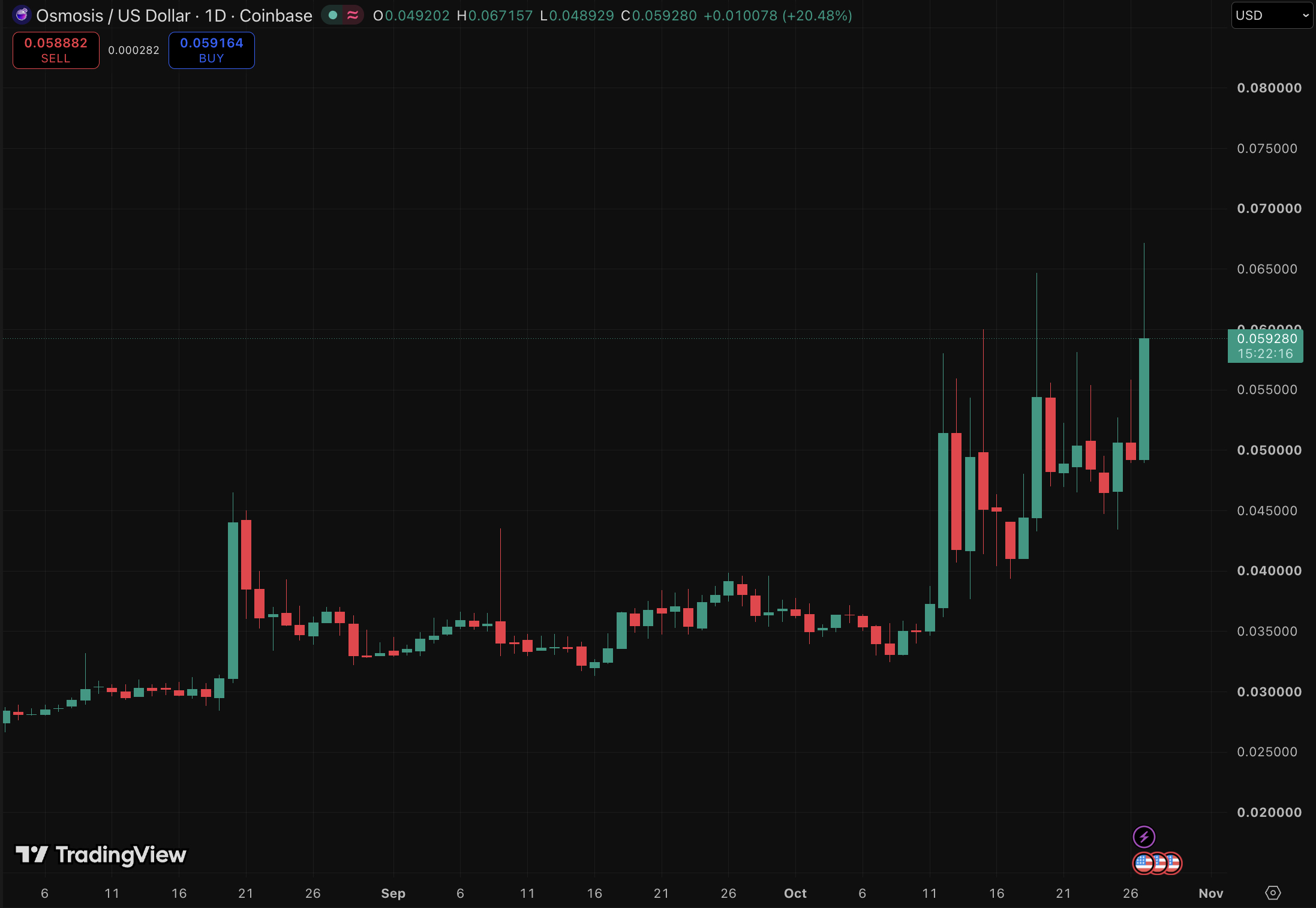
Osmosis Crypto Ends Inflation as OSMO Supply Tightens
Osmosis is a decentralized crypto exchange serving the Cosmos ecosystem. Its Inter-Blockchain Communication (IBC) infrastructure connects blockchain networks, while its platform supports liquidity pools, staking, governance, and automated arbitrage.
The network’s October 2026 governance proposal passed with 91.1% of participating voting power in favor. Osmosis has now stopped inflationary issuance, with staking rewards funded by protocol revenue instead of newly minted tokens.
Flipped the switch.
— Osmosis
OSMO inflation is off. Today's epoch came and went, and 0 new OSMO was minted, down from 91,324 a day.
Prop 1053 passed with 91.1% yes. From here, staking rewards come from protocol revenue, and every OSMO burned cuts supply.
New era.… pic.twitter.com/nQw2VJ34hM(@osmosis) October 26, 2026
This is big because new token issuance can create selling pressure when recipients sell their staking rewards. Ending emissions removes that source of dilution, while existing tokens can still be traded.
The move comes with a challenge, however. Osmosis must generate enough fees to sustain staking rewards and attract users back to its exchange. DefiLlama data showed its total value locked falling from approximately $811 million at the end of 2021 to around $11 million in October 2026.

The supply change is significant, but sustained demand will determine whether the rally lasts.
Discover: The Crypto Presales This Q4 2026
Osmosis Crypto Funding vs. Bitcoin Hyper: A Different Supply Strategy
Osmosis raised $21 million in an October 2021 token sale led by Paradigm, with participation from Robot Ventures, Nascent, Ethereal Ventures and Figment. The funding helped expand its interchain decentralized finance infrastructure.
Bitcoin Hyper has taken a different fundraising route. It has now raised more than $33.2 million through its ongoing presale, exceeding Osmosis’ original $21 million funding figure. No participation from big Venture capitalists, just the community. The comparison also shows the capital attracted by two distinct approaches to crypto infrastructure.
Bro started typing about Bitcoin Hyper and the typewriter went into overdrive.
— Bitcoin Hyper (@BTC_Hyper2) October 27, 2026https://t.co/VNG0P4FWNQ pic.twitter.com/JvMZXa9duH

Osmosis is tightening the supply of an established DeFi token. Bitcoin Hyper is developing a Bitcoin Layer 2 designed to support faster transactions and applications such as decentralized exchanges and staking, using Solana Virtual Machine technology.
Bitcoin Hyper also has a fixed maximum supply of 21 billion HYPER tokens. Unlike an inflationary model, that cap sets an upper limit on the number of tokens that can exist.
The appeal is straightforward: investors looking at supply dynamics can compare OSMO’s newly enforced zero issuance with Bitcoin Hyper’s predetermined supply ceiling.
Gain Access to New Bitcoin Layer 2 Early Before the Presale Window Ends in Less Than a MonthCan Fixed Supply Become the Next Crypto Narrative?
Osmosis Crypto demonstrates how a tokenomics change can give traders a fresh reason to reassess a project. By ending inflation, OSMO has removed one source of potential dilution.
Bitcoin Hyper is pursuing a different path, combining a fixed token supply with infrastructure intended to expand Bitcoin’s utility. Its current presale total funding displays substantial early fundraising interest, while its proposed network targets applications beyond ordinary Bitcoin transfers.
Both projects illustrate the importance of token economics. OSMO has switched off inflation, while Bitcoin Hyper is building around a fixed maximum supply.
Discover: The Best Token Presales
The post Osmosis Crypto Rallies as OSMO Ends Inflation: Fixed Supply Drives Next Big Coin? appeared first on Cryptonews.
Comments (0)
Please sign in to comment.
No comments yet. Be the first to comment.