
Warren Buffett’s Apple investment keeps coming up in conversations right now, and the numbers explain why. Someone who put $10,000 into an Apple stock investment a decade ago, and reinvested the dividends along the way, would have around $122,400 today. That’s the kind of number that makes Buffett’s Apple bet worth a second look, especially since Berkshire Hathaway only started buying Apple shares back in 2016.
Also Read: Apple (AAPL) to pay Samsung $250 per iPhone Duo
Warren Buffett’s Apple Investment, Returns, Buybacks And AAPL Outlook
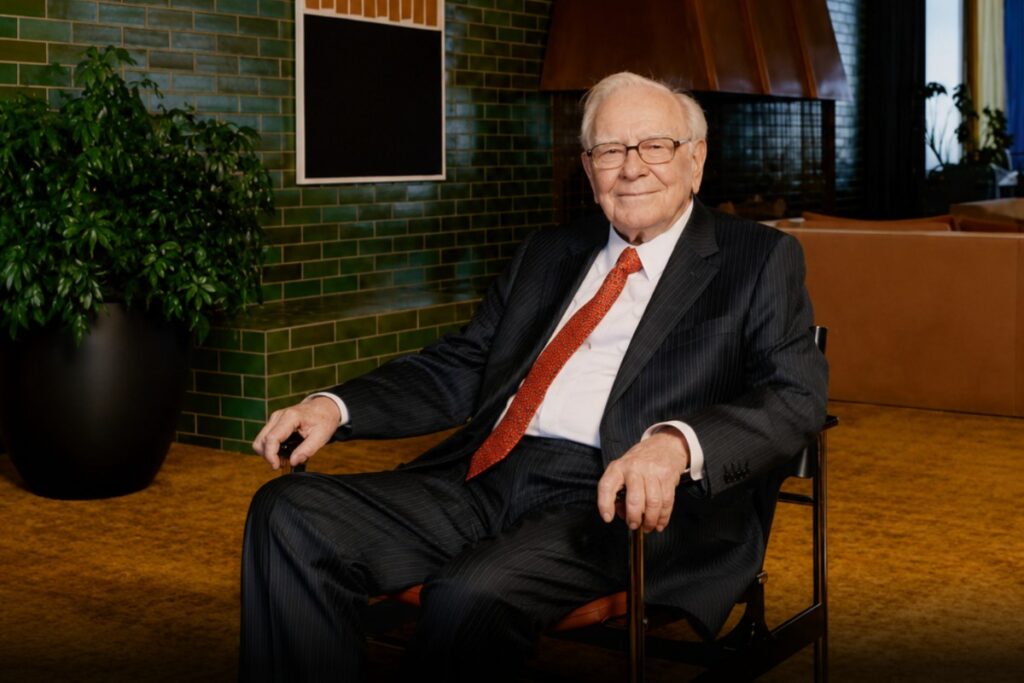
Apple Stock Investment And Buffett’s Original Bet
Warren Buffett’s Apple investment story actually starts with an iPhone, and a pretty small moment at that. Buffett reportedly noticed how upset a close friend got at the thought of losing his phone, back in 2016, and it apparently stuck with him. From there, Buffett and his team slowly built Apple into Berkshire’s biggest equity position, and Buffett talks about the company in the kind of terms he usually saves for consumer brands like Coca-Cola, not tech stocks. At one point, the position made up 40% of Berkshire’s stock portfolio. Berkshire has since sold off some shares, and Apple now sits at around 20% of Berkshire’s roughly $360 billion portfolio, still the single biggest Apple stock investment on the books by a wide margin.
Warren Buffett told CNBC:
“It’s a wonderful business so we own a lot of it.”
Apple Stock Returns And Buyback Strategy
That kind of thinking helps explain why Warren Buffett’s Apple investment kept growing instead of getting trimmed early. Apple stock returns over the last ten years owe a lot to buybacks, and people often skip over that part. The company repurchased around $755 billion worth of its own stock between 2016 and the end of 2025, shrinking the share count and lifting earnings per share along the way. Layer that buyback pace on top of Buffett’s Apple bet, and it becomes a big part of why the original stake grew the way it did.
Anyone digging into the Warren Buffett’s Apple investment at the time of writing will notice the buybacks explain almost as much of the return as the stock price itself. Apple’s lineup, such as the iPhone, AirPods and the Apple Watch, also kept demand steady enough to keep those Apple stock returns climbing.
Karn Chauhan, Senior Analyst at Counterpoint Research, said:
“Apple’s unit sales grew 5% YoY despite a broader market decline.”
AAPL Stock Forecast And What Comes Next
Every AAPL stock forecast right now has to deal with one basic problem, and that’s size. Apple is already the second-largest company in the world, with a market cap close to $4.9 trillion, and companies that big usually grow slower than they used to. John Ternus, the newly installed CEO, is a hardware guy, which some see as a nod back to the Steve Jobs era. Apple has also steered clear of pouring hundreds of billions into AI data centers, unlike a lot of its big tech peers.
CNBC has reported that developers are increasingly running AI workloads on Mac Mini and Mac Studio machines instead of the cloud, mostly because it’s cheaper and easier to carry around. For Warren Buffett’s Apple investment specifically, the stock forecast question isn’t really about repeating the last decade so much as whether Apple’s ecosystem, and its buyback pace, can keep compounding from a much bigger base. None of this changes what the Warren Buffett’s Apple investment already proved over the last decade, but it does shape what comes next.
Also Read: Bank of America Says Apple Stock Could Surge 14% From Here
Buffett’s Apple bet probably won’t happen again at this scale, mostly because Apple has already grown so big. Still, strong Apple stock returns, steady buybacks and a real foothold in AI-ready hardware add a new layer to the Warren Buffett’s Apple investment story going forward, and give anyone weighing a fresh Apple stock investment right now a clearer read on what actually drove the original bet. None of that guarantees the next ten years look like the last ten, but it does explain why Berkshire has kept the position even after trimming it down.
Comments (0)
Please sign in to comment.
No comments yet. Be the first to comment.