

BlackRock is preparing a one-for-three reverse split of its iShares Ethereum Trust ETF (ETHA), a structural change that will lift ETHA’s share price and could reduce its effective trading spread without changing the value of investors’ holdings.
ETHA’s sponsor approved the reverse split on July 31, according to an SEC regulatory filing. Every three shares held on the Oct. 5 record date will be combined into one when split-adjusted trading begins on Nasdaq on Oct. 6.
Why is BlackRock doing this?
Reverse splits often carry a negative signal in equity markets because struggling companies use them to lift depressed share prices and avoid delisting. A 2025 Reuters report revealed that around 80% of the companies that executed reverse splits had a market value below $250 million.
While BlackRock offered no explanation for ETHA’s reverse split, the fund’s prospectus gives its sponsor authority to take such action when it believes the secondary-market price has moved outside a desirable trading range.
In view of this, one reason the asset manager might be taking this action is to raise the nominal value of the shares.
This year, ETHA’s share price has fallen by more than 37% to roughly $14.15, meaning a $10,000 investment made at the end of 2025 would now be worth about $6,300.
The poor price performance can be attributed to Ethereum’s broader price struggles. Data from CryptoSlate shows that the digital asset’s value has declined from over $3,200 at the beginning of the year to around $1,870 as of press time.
This decline has left ETHA near the lower end of the spot Ethereum ETF market by nominal price despite its position as the category’s largest fund. ETHA held about $5.4 billion in net assets as of Aug. 4 and had attracted more than $11 billion in cumulative net inflows.
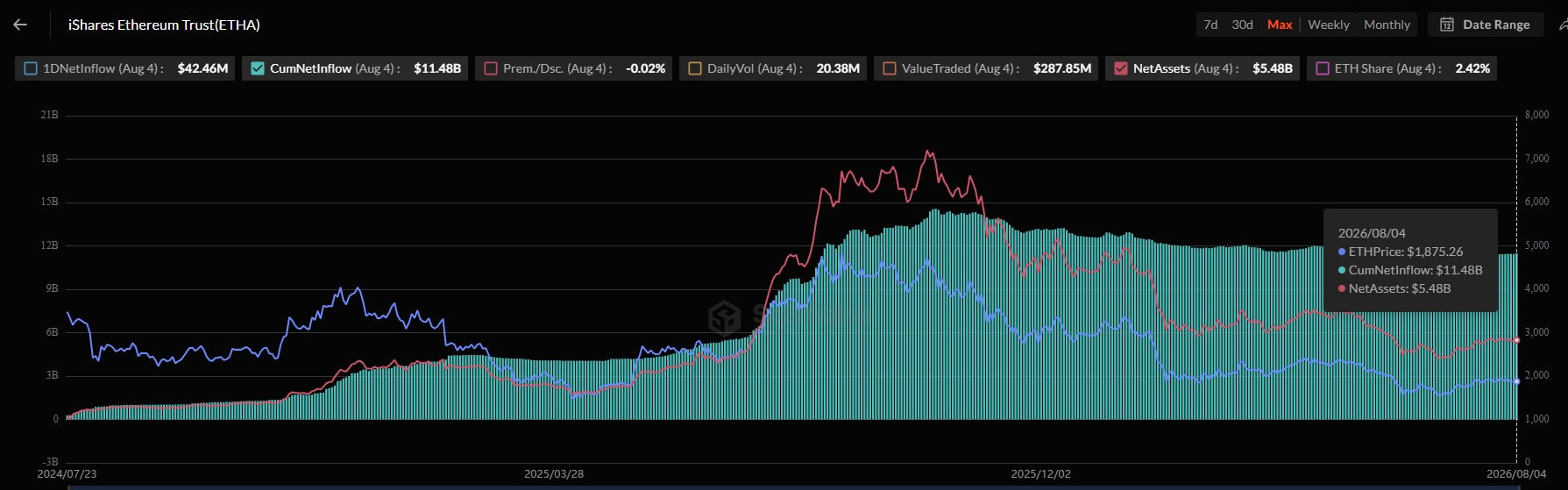
Yet its shares traded below Grayscale’s Ethereum fund at around $18, Morgan Stanley’s newly launched MSSE at about $20 and VanEck’s ETHV product at approximately $27.
The reverse split would lift ETHA’s share price from $14.15 to about $42.45 while reducing its outstanding share count from roughly 384 million to 128 million.
That would place ETHA above its major rivals by nominal share price and give the market’s largest Ethereum ETF a price profile closer to its position within the category.
However, the transaction will leave shareholders’ investment values unchanged; it will not reverse ETHA’s year-to-date losses.
This means an investor holding 300 shares worth $4,245 before the split would receive 100 shares worth the same amount afterward, assuming ETH’s price remains stable.
ETHA’s reverse split could deepen its cost advantage
The reverse split could also widen the trading-cost gap between BlackRock’s Ethereum fund and the crypto platforms used by retail buyers.
Bloomberg Intelligence ETF analyst Eric Balchunas said ETHA’s bid-ask spread could fall from about seven basis points to roughly two after its share price rises to around $42.
A one-cent spread currently represents about 0.071% of ETHA’s share price. Following the consolidation, the same one-cent spread would equal about 0.024%, provided market makers continue quoting the fund at that level.
Balchunas said the potential reduction showed the degree to which ETF issuers treat even small execution costs as a problem.
He contrasted ETHA’s projected two-basis-point spread with the charges retail investors can encounter when purchasing crypto directly.
Balchunas said providers available through hardware-wallet provider Ledger quoted him at least 150 basis points to convert dollars into Bitcoin during his research. He added that Coinbase’s simplified buying service charged slightly less, at about 140 basis points.
That would make the Coinbase transaction in his example about 70 times more expensive than ETHA’s projected spread. A direct crypto trade costing 40 basis points would still carry a percentage charge 20 times higher.
Fees vary across exchanges, payment methods, transaction sizes and customer tiers. Active traders can often secure lower rates through order books and volume-based pricing, while newcomers using simplified purchase services may face larger spreads and embedded charges.
ETHA and direct crypto purchases also serve different purposes. The ETF offers ETH exposure through a brokerage account and carries a separate annual sponsor fee, while direct buyers can withdraw the asset, hold it in self-custody, or use it on-chain.
The October split would nevertheless leave BlackRock’s largest Ethereum ETF trading at a fraction of the upfront cost reported on some retail crypto on-ramps.
The post BlackRock’s rare ETHA reverse split is about to make trading Ethereum 70 times cheaper than Coinbase appeared first on CryptoSlate.



Comments (0)
Please sign in to comment.
No comments yet. Be the first to comment.