
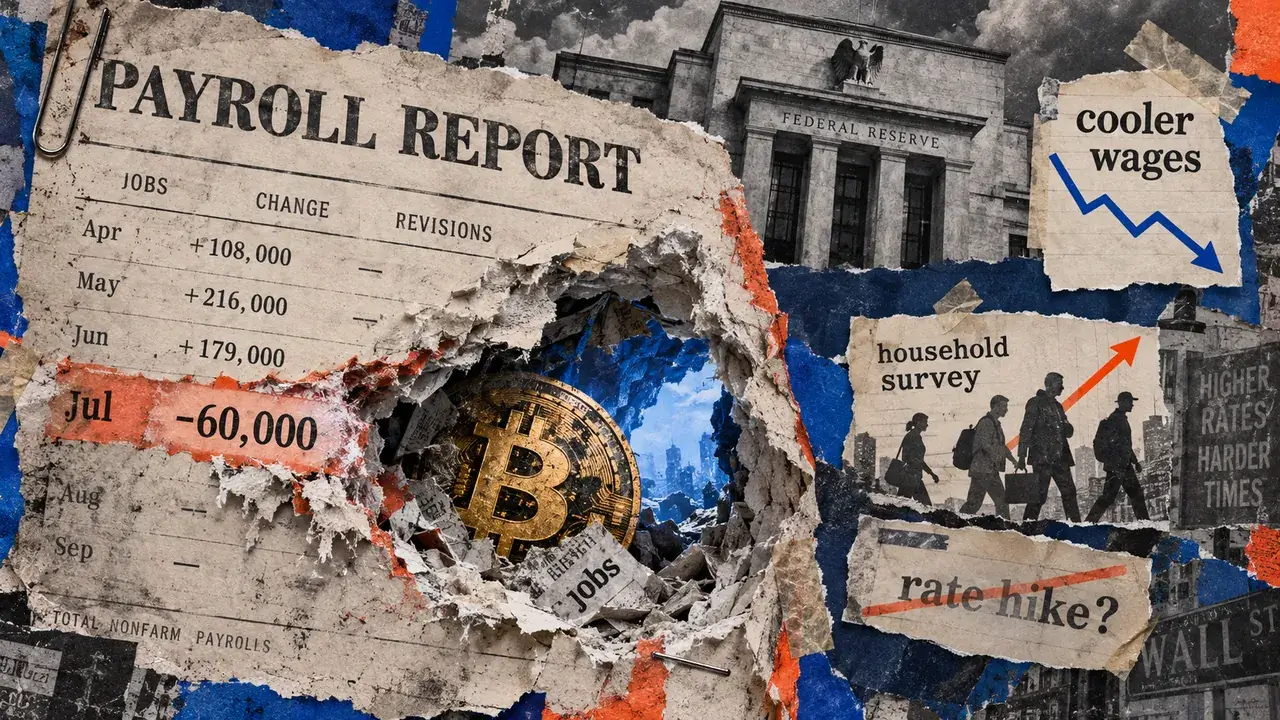
The US Bureau of Labor Statistics (BLS) revised July and August payroll gains down by 60,000 on Oct. 2, weakening the labor-based case for another Federal Reserve hike and potentially easing one policy pressure on Bitcoin.
The September employment report put payroll growth at 29,000. July’s estimate flipped from 21,000 jobs added to 10,000 lost; August’s fell from 162,000 to 133,000. The 60,000 adjustment revises earlier estimates, rather than identifying new September job losses.
Average hourly earnings for all employees on private nonfarm payrolls rose 0.1% monthly and 3.0% annually, below the 0.3% and 3.1% originally reported for August.
The numbers arrive after the Fed’s Sept. 16 quarter-point hike to a 3.75%–4% target range. Its statement said job gains had kept pace with the workforce and inflation remained elevated. Friday’s release gives policymakers a softer payroll picture than the earlier estimates suggested.
Weak hiring and slower reported wage growth provide less support for tightening policy to restrain labor demand.
Inflation still gives the Fed a reason to consider further tightening. August personal consumption expenditures (PCE) inflation, released Sept. 30, ran at 3.4% annually, or 3.0% excluding food and energy. Both exceeded the Fed’s 2% goal.
For Bitcoin, a softer labor case could reduce the threat of higher discount rates, a potential pressure on speculative assets. A February 2023 New York Fed staff study found Bitcoin largely unresponsive to monetary and macroeconomic surprises in an intraday event study.
The separate household survey offered a different picture. Employment rose an estimated 406,000, participation moved from 61.6% to 61.8%, and unemployment edged from 4.1% to 4.2%. The labor force grew by 485,000, allowing employment and unemployment to rise together.
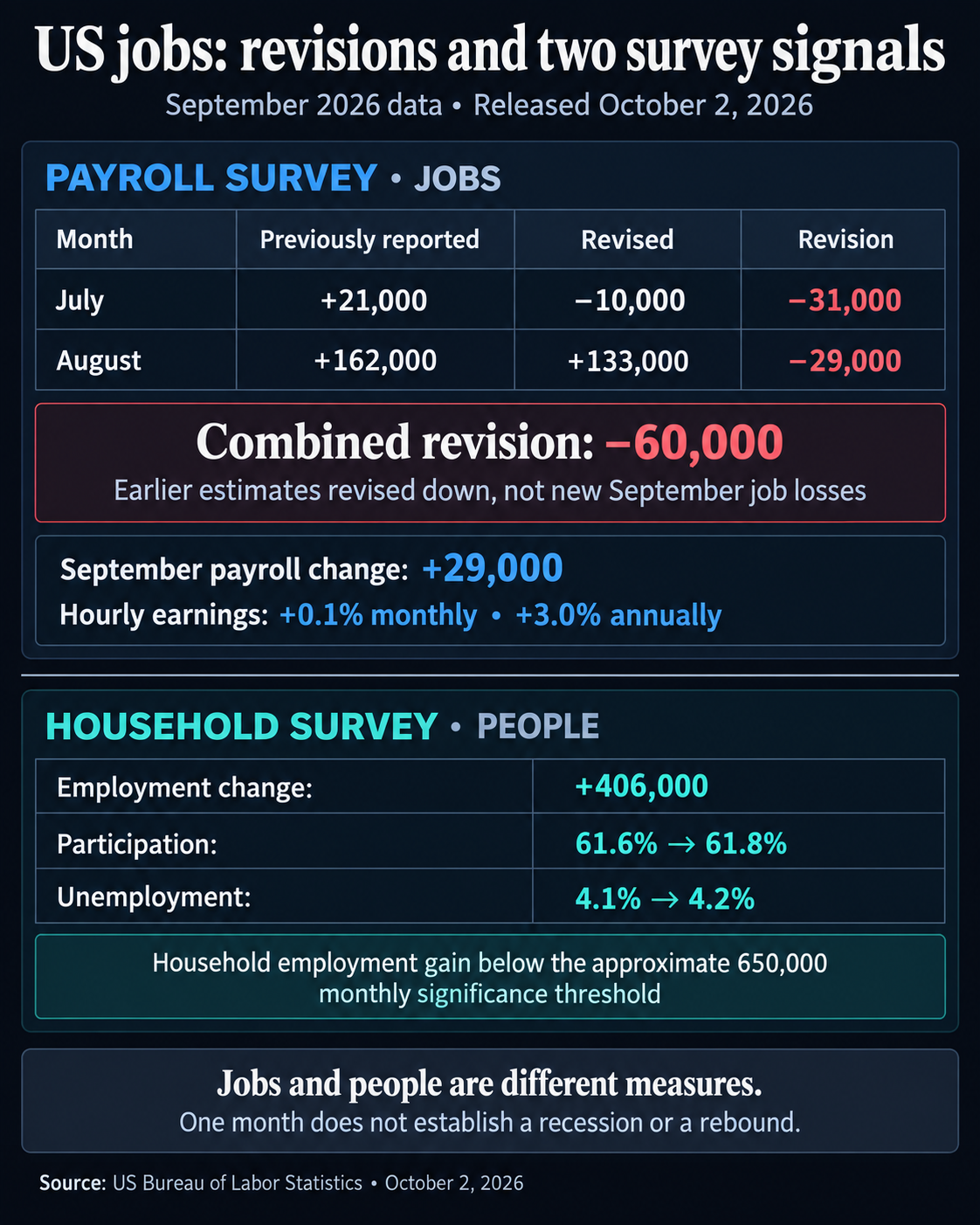
These figures count people, while payrolls count jobs. The household survey also covers workers excluded from payroll data. September’s monthly employment changes were below BLS’s approximate significance thresholds of 650,000 for households and 122,000 for payrolls.
The mixed picture limits both a recession declaration and a claim of a decisive employment rebound. Weaker payrolls offer a reason to question further tightening, while the household figures complicate treating the report as evidence of an employment slump.
Stronger subsequent inflation or hiring would weaken that interpretation. The next jobs release is scheduled for Nov. 6.
The post US jobs revision turns July’s 21,000 gain into a 10,000 loss appeared first on CryptoSlate.




Comments (0)
Please sign in to comment.
No comments yet. Be the first to comment.