
China’s central bank injected a net 348 billion yuan, about $51.7 billion, into its banking system on Friday. Bitcoin (BTC) fell 1.7% anyway.
It was the first mid-month use of overnight reverse repos by the People’s Bank of China (PBOC), according to Bloomberg. Three more injection days are already booked, each capped near $88 billion.

Beijing Already Booked Three More Injection Days
Start with what the tool actually does. An overnight reverse repo is a one-day loan from the central bank to commercial banks. The banks repay it the next morning.
Two days before Friday, the PBOC published its schedule. It would lend on August 14, then again from August 17 through August 19, local media reported.
Each day carries a ceiling of 600 billion yuan, close to $88 billion. Friday used only 58% of that room.
Add up all four days and the ceiling reaches 2.4 trillion yuan. That is a liquidity corridor, not a one-off gesture.
The corridor exists because Beijing has stopped cutting rates. The PBOC has held its one-year benchmark lending rate at a record low 3% since May 2025. Plumbing has replaced rate cuts.
China’s Bond Market Broke Ranks With Everyone Else
Domestic bonds moved first. China’s 10-year government bond yield slipped to 1.68%, its lowest since July 2025. A government bond auction the same day drew the weakest 10-year yields in over a year.

Now compare that with the United States. The 10-year Treasury yield sat near 4.63%. The gap between the two is roughly 295 basis points.
Japan’s 10-year yield closed at 2.87% on Thursday, still near multi-year highs. Bitcoin trades against that global cost of money, not China’s.

Rising Western borrowing costs have squeezed risk assets all year. The highest 30-year Treasury yield since 2007 arrived in July. Bitcoin has traded heavily since.
Currency stress added to the strain. Traders watched yen intervention fade again this month, and global funding stayed tight.
Whether Any of This Cash Reaches Bitcoin
There is now a precedent worth checking. The PBOC launched this tool on June 29 with 300 billion yuan, about $44 billion. Bitcoin fell then too. BTC dropped 2.26% to $58,504 by the following morning, according to Fortune data.
Two injections, two declines. The sample is small, but it is the only direct evidence available.
The longer view reads differently. Bitcoin has gained roughly 7% since that June operation. Slow drift, not injection-day pops.
Analysts describe Friday as tuning rather than easing. Mid-month tax bills drain cash from banks, and the PBOC refilled the hole.
“The stance toward liquidity management appears unchanged, in that the PBOC aims to smooth liquidity but not overflood the market,” said Frances Cheung, head of foreign exchange and rates strategy at Oversea-Chinese Banking Corp., in published remarks.
Capital controls are the harder barrier. Chinese banks cannot send reserves to offshore crypto markets. Domestic trading stays banned.
Any effect on Bitcoin therefore arrives indirectly, through mood and currency markets. Crypto has leaned on that hope before. Last November, central banks flooded markets on both sides of the Pacific, and bulls read it as a starting gun.
Still, calmer funding costs matter to leveraged traders.
“The better-anchored market repo rates, with likely lessened volatility of overnight funding costs ahead, could lift conviction in carry trades in the near term,” Jeffrey Zhang, strategist at Credit Agricole CIB, in the same report.
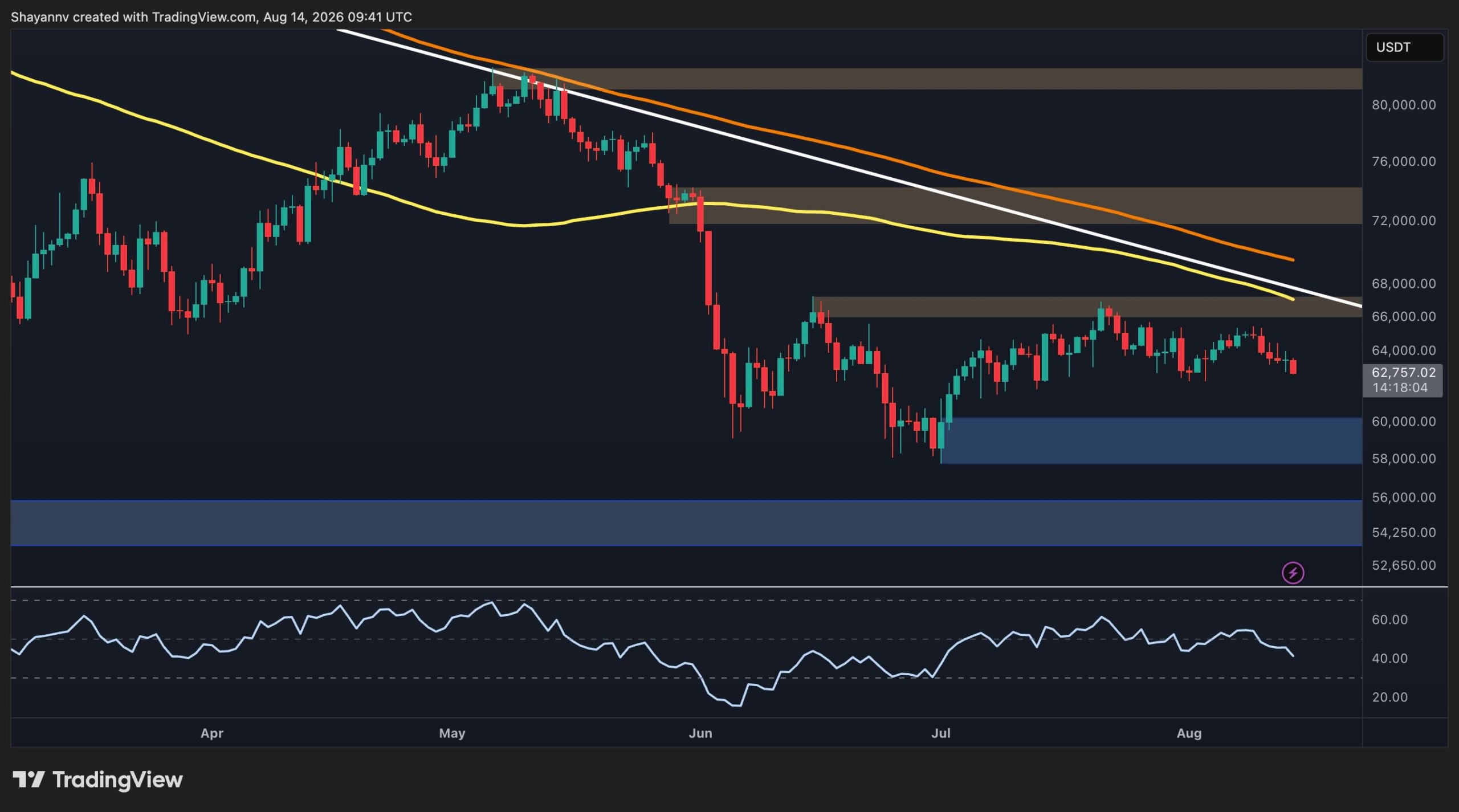
Carry trades borrow cheap money in one currency to buy assets elsewhere, including Bitcoin near $62,800. Steadier overnight rates in China trim one cost in that chain.
Monday brings July activity data and the next injection window. China grew 4.3% in the second quarter, its weakest pace since late 2022. July consumer prices also missed forecasts.
Friday delivered the cash and Bitcoin still dropped. If Chinese liquidity can move global risk appetite, Aug. 17 through Aug. 19 should prove it.
The post China Injected $52 Billion and Bitcoin Fell, Three More Days Are Scheduled appeared first on BeInCrypto.