Bitcoin vs FUD | The Bears Lost This Round
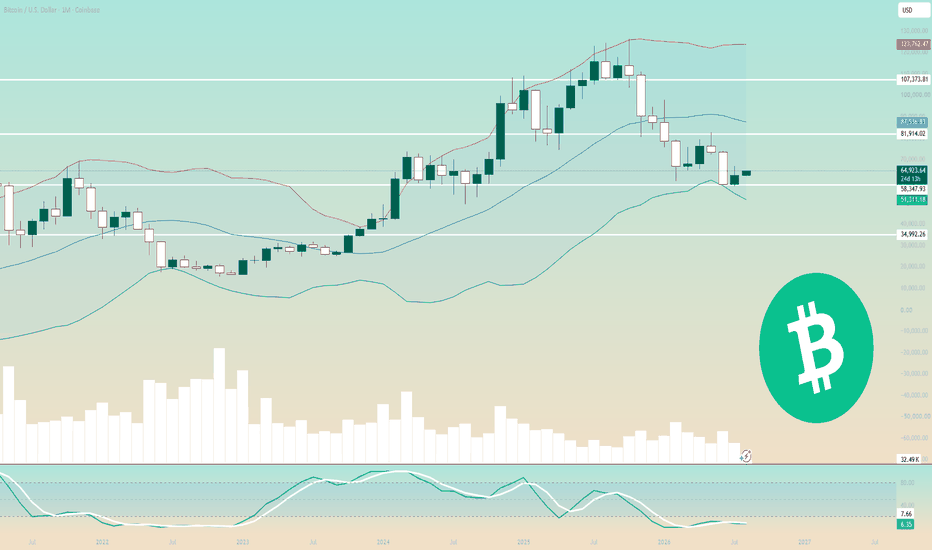
Bitcoin has recovered from around $62.5K at the start of the week and is now trading back near $64K. What stands out is not necessarily the strength of the rally, but the market’s ability to absorb several negative events without a major breakdown
Last week, Strategy announced the sale of 1,638 BTC worth approximately $104.7 million. At the same time, the Coldcard security incident continued to grow, with estimated losses reaching around 1,755 BTC, or roughly $110 million, across nearly 5,000 wallets as of August 4. Despite these developments, Bitcoin managed to hold its ground instead of facing a deeper sell off
Volatility Refuses to Panic
The options market is showing a similar level of calm. 7 day and 30 day at the money implied volatility stood at 28.8 and 32.6, both near the lower end of their recent ranges, while 90 day volatility remained at 37.1
Short-term downside protection demand has also eased. The 7 day 25 delta risk reversal improved from -7.39 to -2.10, showing that traders are less aggressively positioning for a sharp decline
While short-term implied volatility remains slightly above recent realized volatility, the 90 day market is pricing in less volatility than what has already occurred. Positioning has also become more balanced, with traders selling large amounts of August $50K puts while showing selective interest in short term $65K calls
The overall message is clear, despite several crypto specific shocks, options markets are not showing the same level of fear that typically appears during major market sell offs
Growth Holds, Hiring Slows
The US economy continues to send mixed signals. July’s ISM Manufacturing PMI climbed to 55.6, its strongest level in more than four years, while the services sector remained in expansion territory at 54.1
However, employment data has been weaker. JOLTS job openings dropped to 7.36 million, ADP private payrolls added only 44,000 jobs, and the ISM services employment index returned to contraction
The picture that emerges is an economy that is still growing, but with a slower pace of hiring. Layoffs remain relatively limited, suggesting the labor market is cooling rather than entering a broad downturn
Markets are now focused on July’s payroll report. Wall Street expects around 83,000 jobs added, with unemployment staying at 4.2%. With inflation still above the Fed’s target, the report will play an important role in shaping expectations for future interest rate decisions
Hormuz Remains a Risk Factor
Geopolitical uncertainty continues to influence markets. Iran and Oman have made progress toward a potential agreement regarding commercial traffic through the Strait of Hormuz, but a full reopening has not yet been achieved
The proposed arrangement would create separate shipping lanes under Iranian and Omani oversight, but key issues such as transit fees and unrestricted access remain unresolved
Meanwhile, Iran’s parliament is considering legislation that could limit access for vessels connected to countries it considers hostile, with possible penalties reaching up to 20% of cargo value for violations. US maritime authorities continue to view the risk to commercial shipping in the region as elevated
Brent crude has moved back above $83 as markets assess the possible impact on energy supplies and global shipping. Until there is more clarity, Hormuz remains a major source of uncertainty across financial markets
Japan Remains a Global Liquidity Story
Japan continues to be an important factor for global markets. Attention increased after Treasury Secretary Scott Bessent’s handwritten notes appeared to mention a possible $5 billion to $10 billion US purchase of yen
The following US intervention was carried out by the New York Fed on behalf of the Treasury and, unusually, involved selling euros to buy yen instead of selling dollars
The bigger issue is not the intervention itself, but what it means for global currency flows, bond markets, and liquidity conditions. The Bank of Japan still owns roughly half of all outstanding Japanese government bonds, while rising domestic yields have made Japanese fixed income more attractive after years of ultra low rates
The key question is whether higher Japanese yields encourage domestic investors to bring capital back home instead of allocating it overseas. That potential shift keeps the yen and JGB market important for global liquidity and bond markets
Resilience, Not Confirmation
For crypto markets, this week’s price action shows resilience rather than a confirmed trend reversal. Bitcoin has absorbed corporate selling pressure and a major security incident, while options markets show limited signs of panic
However, the broader environment remains uncertain. Labor data, energy prices, US Treasury yields, and Japanese monetary conditions continue to influence the liquidity backdrop for digital assets.
Regulatory progress in the US has also slowed. The Senate has not completed work on the CLARITY Act before the August recess, pushing the next major legislative window toward September. The bill still faces procedural challenges, unresolved ethics concerns, and criticism from community banks over potential competition from stablecoins
The process is still moving forward, but the delay reduces short term regulatory clarity
For now, the situation is straightforward.. the market is no longer getting worse, but Bitcoin’s price action has not yet confirmed a stronger move into a new trend.