Are Hidden Water Costs Driving Global Cotton Futures?
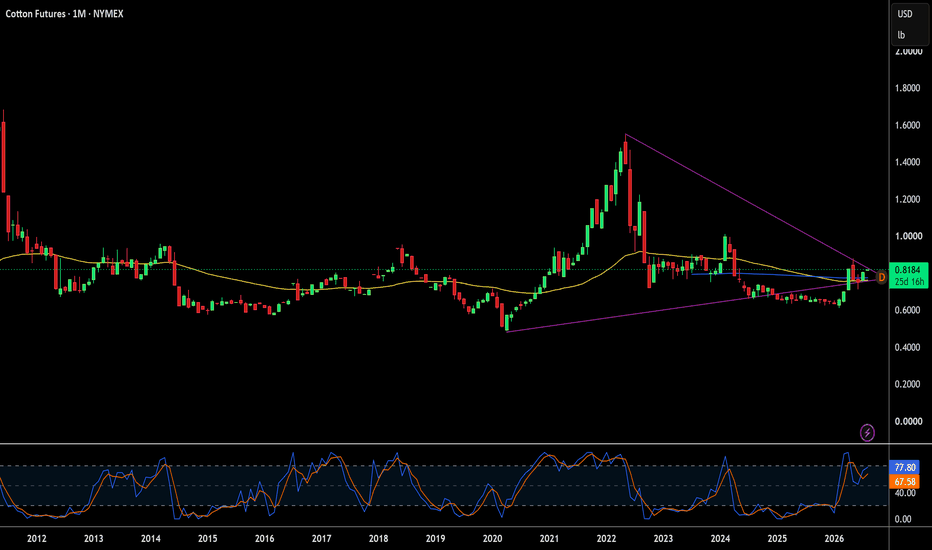
Investors often misunderstand the true volatility of global cotton futures. They typically blame erratic weather patterns or sudden trade tariffs. A new Chatham House study, "The Water Footprints of Global Textiles Trade," points to a deeper catalyst. Every textile carries what researchers call a hidden water footprint, the water embedded in its production, trade, consumption, and eventual disposal. The global textile industry employs roughly 90 million people, more than half of them women. For Bangladesh, Pakistan, India, and Uzbekistan, this industry remains a vital source of jobs and export revenue. But the same water pressures that built these industries now threaten their future growth. Cotton futures increasingly reflect this hidden resource constraint.
Geopolitics and Geostrategy in Agriculture
Water scarcity is reshaping textile trade geopolitics in concrete, measurable ways. Chatham House uses a "baseline water stress" metric, the ratio of total water demand to available renewable supply, to compare exporting and importing nations. China was the largest cotton lint importer in 2024 at 2.6 million tonnes, followed by Bangladesh, Vietnam, Turkey, and Pakistan. Crucially, not all imported cotton carries the same hidden cost. Cotton grown in India, Bangladesh, and East and West Africa relies mostly on rainfed "green water." Cotton from Uzbekistan, the United States, Pakistan, Australia, Egypt, and China relies far more on irrigated "blue water," drawn directly from stressed rivers and aquifers. That distinction means two countries can export the same volume of cotton while imposing very different burdens on scarce freshwater systems.
Macroeconomics and Global Economics
The economic stakes are substantial for the countries most exposed. Bangladesh's apparel sector alone contributed 81.5% of the country's total export earnings in 2024/25. A separate peer-reviewed study found Bangladesh's ready-made garment sector carries a total cotton cultivation water footprint of 25 billion cubic meters, with roughly 91% of that tied to cotton grown abroad and imported as embedded, or "virtual," water. About a third of that footprint relates to water pollution from processing rather than cultivation itself. When a country this economically dependent on textiles imports cotton grown under heavy irrigation stress, its entire export engine inherits a resource risk that does not show up on any conventional balance sheet.
Industry Trends and Innovative Business Models
Chatham House calls for trade policy to incorporate water stewardship and circular economy principles directly, alongside common government standards for measuring textile water footprints. Textile companies are responding by investing in regenerative agriculture, forest conservation, recycling technologies, and better supply chain monitoring. This is a genuine business model shift, not a marketing exercise, since buyers are increasingly asking suppliers to document water sourcing, not just final product cost. Firms that can prove their cotton draws on rainfed rather than irrigated sources may gain a real, defensible advantage as water stewardship becomes a procurement criterion rather than an afterthought.
Management Leadership and Corporate Culture
Chatham House frames the challenge as demanding "a whole-of-value-chain approach, and collective commitment to more sustainable and circular practices." That requires management attention extending well beyond a company's own factory floor, back into cotton fields in countries the company may never directly visit. Executive teams that map their water exposure by sourcing country, distinguishing green-water suppliers from blue-water ones, gain a genuine risk management edge unavailable to competitors still treating cotton as an undifferentiated commodity.
Technology Science and High Tech Solutions
Precision agriculture and remote monitoring are becoming essential tools for managing this exposure. Farmers deploy soil moisture sensors and satellite imagery to track water use against crop yield in real time. This data increasingly feeds directly into the kind of water footprint accounting Chatham House is calling for, giving traders and manufacturers visibility into a variable that was previously invisible in standard commodity pricing.
Cybersecurity and Patent Analysis Edge
As water footprint data becomes commercially material, protecting it becomes a genuine cybersecurity concern, not just an agricultural one. Patent activity in drought-resistant and lower-water cotton varieties continues to grow, and companies that can document verifiably lower water footprints stand to capture a real pricing premium as buyers factor sustainability into sourcing decisions.
The Critical Pharmaceutical Industry Connection
Medical-grade cotton and cellulose remain essential inputs for wound care and certain drug delivery systems. Since cotton's water footprint is concentrated overwhelmingly in cultivation rather than processing, per the 91% figure from the Bangladesh study, pharmaceutical supply chains sourcing raw cotton inherit the same underlying water exposure as the broader textile industry, even though the end use is medical rather than apparel.