
Why Is Oil Gapping So Often?
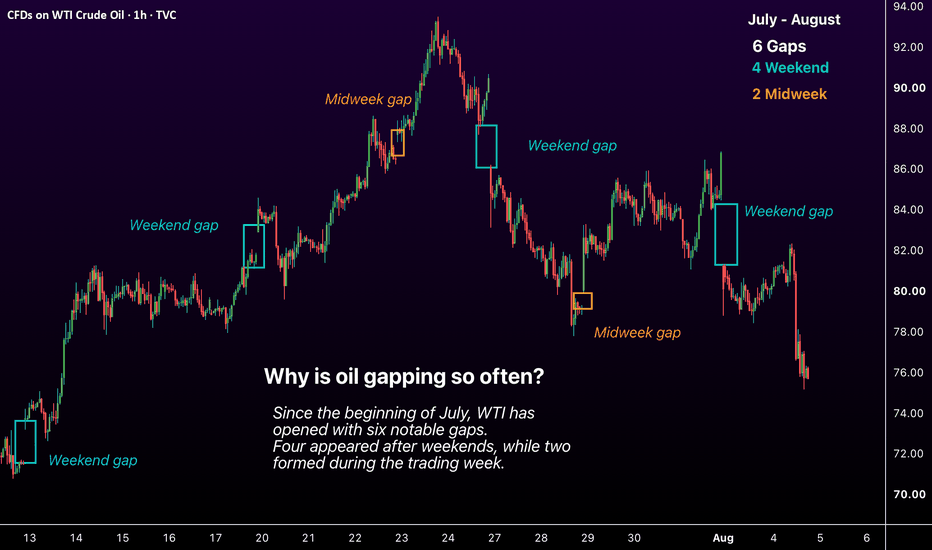
Over the past month, one detail kept catching my attention every time I opened the oil chart: another gap.
Since the beginning of July, I have marked six noticeable gaps. Four appeared after weekends, while two developed during the trading week. That distinction matters because not every gap carries the same information—and not every gap should be traded the same way.
Oil has recently become extremely sensitive to headlines. Supply-route risks in the Middle East, sudden shifts in expectations around U.S.–Iran diplomacy, changes in OPEC+ production policy and unusually tight inventory conditions have all forced traders to reprice crude quickly. When important information arrives faster than liquidity can absorb it, price can jump from one level to another instead of moving smoothly.
Weekend Gaps
Weekend gaps are the easiest to explain.
The market closes, but the world does not. Political statements, military developments, sanctions, production announcements and shipping disruptions can all occur while regular trading is paused. When liquidity returns, the opening price immediately reflects the information accumulated during the closure.
However, a weekend gap is not automatically a signal to trade against the move. The popular idea that “every gap must be filled” is one of the most dangerous assumptions in trading.
A gap may close when the initial reaction was exaggerated. But when it reflects a genuine change in supply expectations, price can continue in the same direction and leave the gap open for much longer than expected.
Midweek Gaps
The two midweek gaps are more interesting.
WTI futures trade for almost the entire day, although the main contract still has scheduled breaks. The appearance and size of a gap can therefore differ between futures, CFD brokers and TradingView data feeds. Before trading one, I always check whether the same gap exists on the underlying futures chart.
Midweek gaps can also form around sudden headlines or scheduled data. The EIA normally releases its Weekly Petroleum Status Report on Wednesdays at 10:30 a.m. Eastern Time, and an unexpected inventory result can produce an immediate repricing of crude.
How I Approach Oil Gaps
I do not enter simply because a gap exists. First, I watch what happens afterward.
If price holds outside the previous range, forms new structure and continues attracting momentum, I treat the gap as evidence of a genuine repricing. In that situation, fading the move can be unnecessarily risky.
If price quickly loses momentum and returns inside the pre-gap range, the probability of a partial or complete gap fill increases. That is when a reversal setup becomes more interesting—but only after the market confirms it.
The gap itself is not the trade. The reaction around it is.
Oil is currently reminding traders why weekend exposure and oversized positions can be dangerous. When the market becomes this headline-driven, risk can change before there is any opportunity to react.
Do you normally trade in the direction of an oil gap, fade it, or wait for the market to build structure first?
