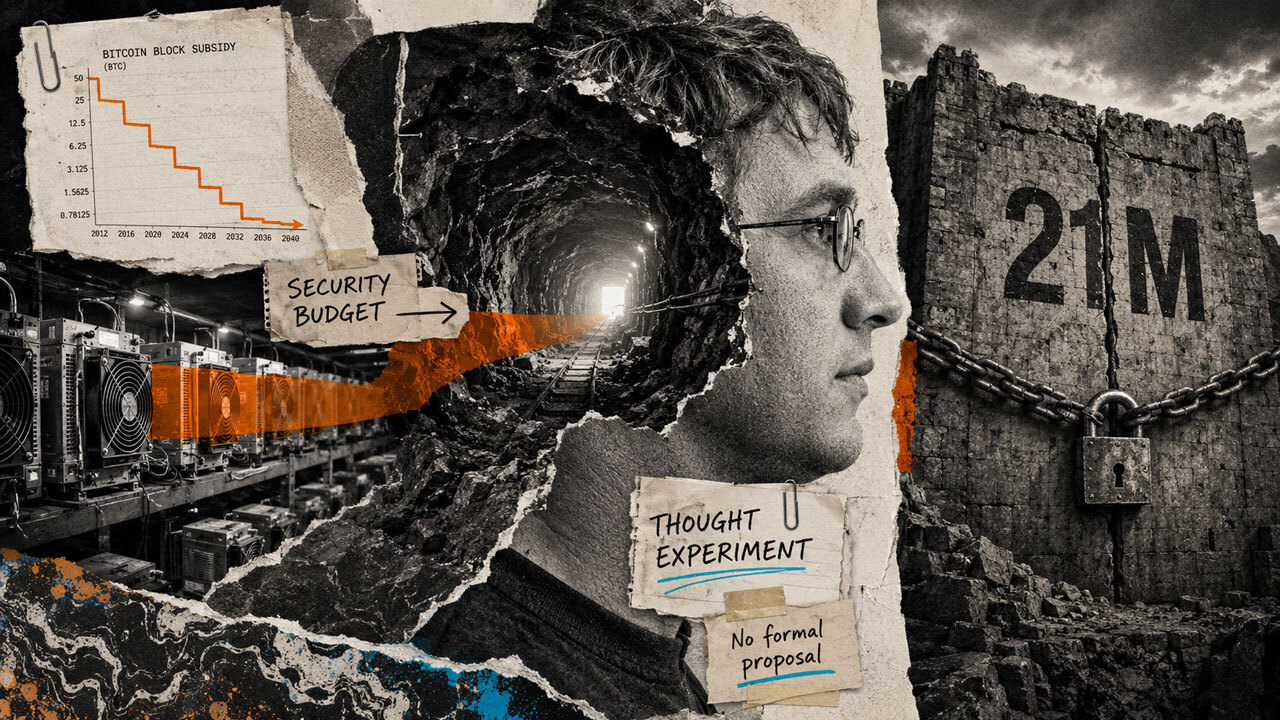
Early Bitcoin developer and self-proclaimed “Bitcoin thought leader,” Peter Todd, has revived debate over Bitcoin's 21 million-coin limit and whether Bitcoin tail emission could help fund proof-of-work security as block subsidies shrink. The dispute turns on whether transaction fees alone can eventually fund adequate security.
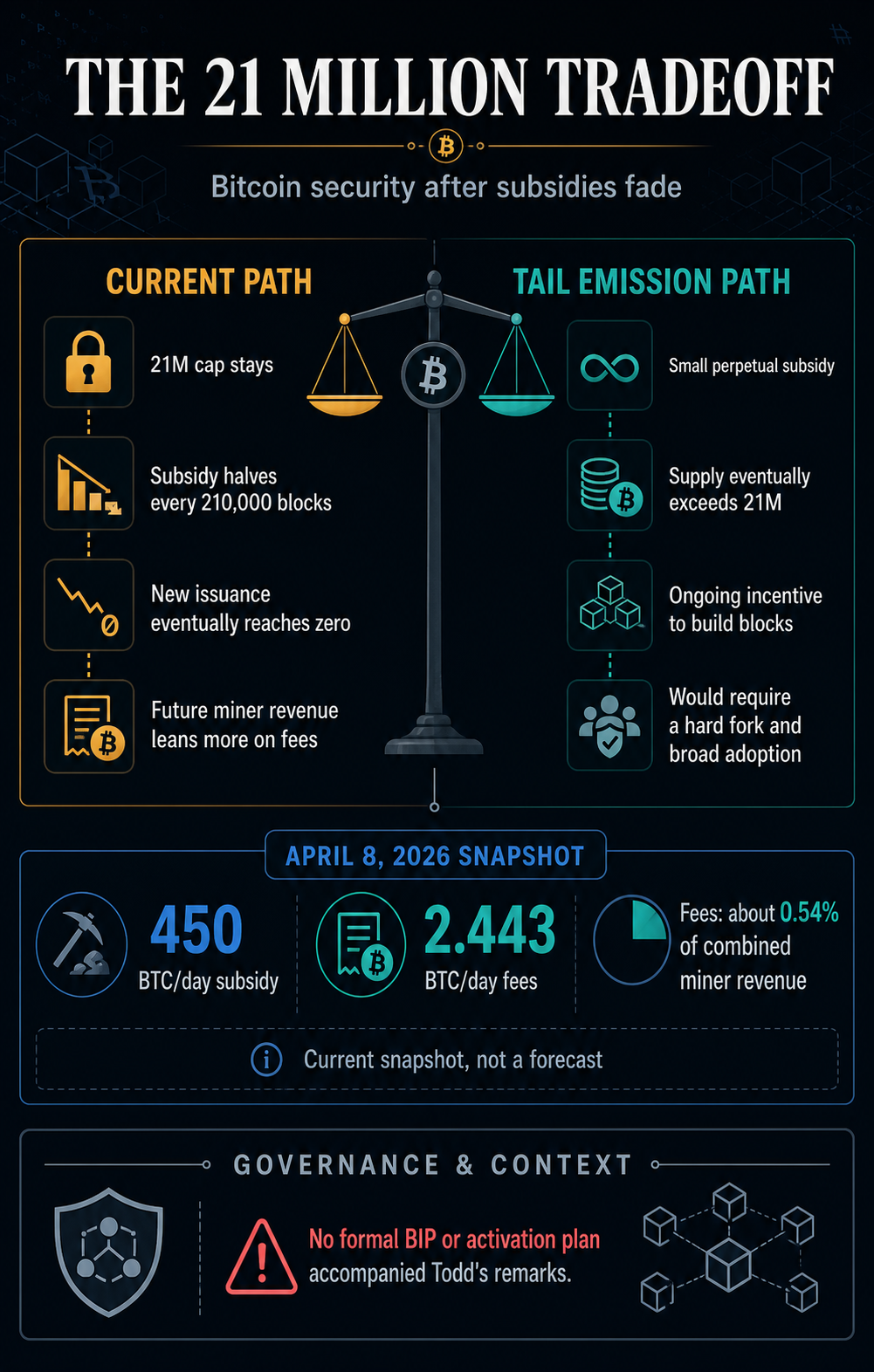
The clip posted Aug. 16 framed Todd as saying Bitcoin should eliminate the cap. Todd did not call for an immediate cap change; he framed tail emission as a long-term design question. In a July 23 talk at Bitcoin++ Toronto, Todd argued that Bitcoin is moving from subsidy-supported security toward a fee-dominant model. He said there is no proven example showing that the destination will work at Bitcoin's scale. He did not unveil a BIP, Bitcoin Core pull request, activation plan, or adoption decision.
Why Bitcoin tail emission is under debate
Bitcoin miners earn a block reward made up of newly issued bitcoin and transaction fees. The protocol cuts the subsidy in half every 210,000 blocks, roughly every four years, until new issuance eventually stops. Fees must then account for more of miner compensation, even though demand for block space may not produce revenue that is both sufficient and consistent.
In the recorded talk, Todd described that transition as an uncertain phase change. He discussed Bitcoin tail emission, a small perpetual subsidy. It would continue creating Bitcoin after the current schedule ends and eventually push the total supply beyond 21 million. Todd said 1% annual issuance might be excessive, while arguing that a lower rate could be economically small compared with Bitcoin's normal price swings and still give miners a continuing reason to extend the chain.
Today's fee revenue does not show how the market will behave as block subsidies continue to shrink. It offers a snapshot of the current gap between fees and subsidy. CryptoSlate reported that on April 8, 2026, miners collected 2.443 BTC in daily transaction fees against roughly 450 BTC in daily subsidy. Fees were about 0.54% of the combined amount in that dated snapshot.

How Bitcoin critics frame the cap debate
Three established Bitcoin voices responded on X, but their posts were individual views rather than a representative measure of community opinion. Each saw the larger risk in Bitcoin's ability to preserve a monetary rule that users expect to remain fixed.
Dan Held called the idea bad and linked a 2019 essay arguing that a monetary system conveys information through rules that market participants expect to remain predictable. In that view, the exact cap matters less than the assurance that it cannot be revised when circumstances become uncomfortable.
Giacomo Zucco drew a different distinction. He argued on X that a reasonably low tail emission would not by itself destroy Bitcoin. He said arbitrarily changing established economic fundamentals would be existential. Todd then highlighted Zucco's concession about a low emission and said he would use that line in future slides. Todd did not endorse Zucco's broader warning about changing the rule.
Hodlonaut, another established Bitcoin voice, warned that gradual erosion of Bitcoin's ethos and culture could weaken the social defense of the cap.
Todd has discussed Bitcoin tail emission and the security risk for years. In a 2022 public AMA, he described eventual transaction-fee dominance as a major state change that no other proof-of-work currency had undergone. He also supplied the strongest practical objection to his position: raising the cap to add tail emission would require a highly disruptive hard fork that could do more harm than the problem it was meant to solve.
What changing the supply rule would require
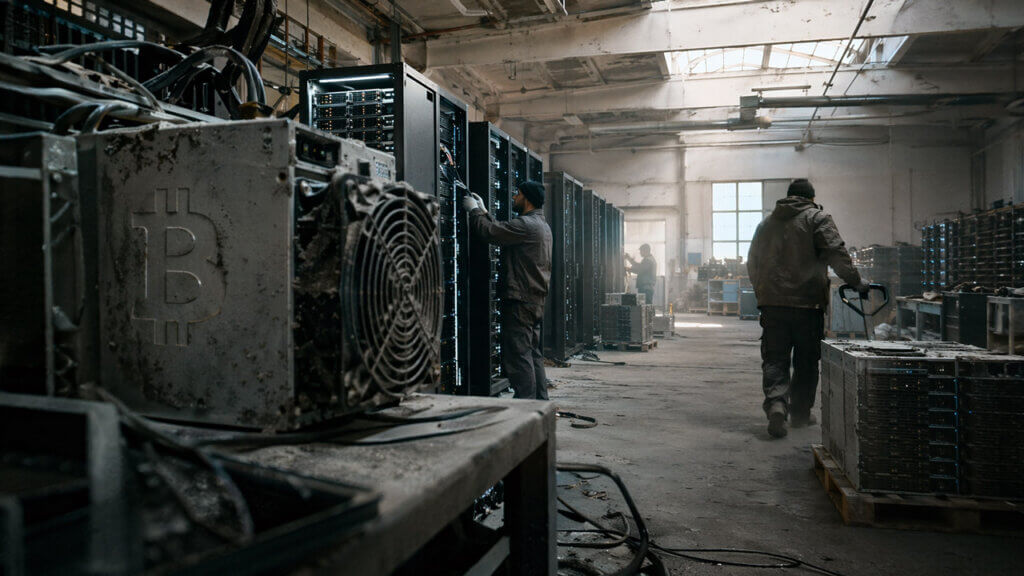
Bitcoin Core's mainnet parameters still retain the 210,000-block halving interval. A developer can publish alternative code, but cannot make existing nodes accept new issuance rules. Operators and other network participants would have to choose software that enforces the change.
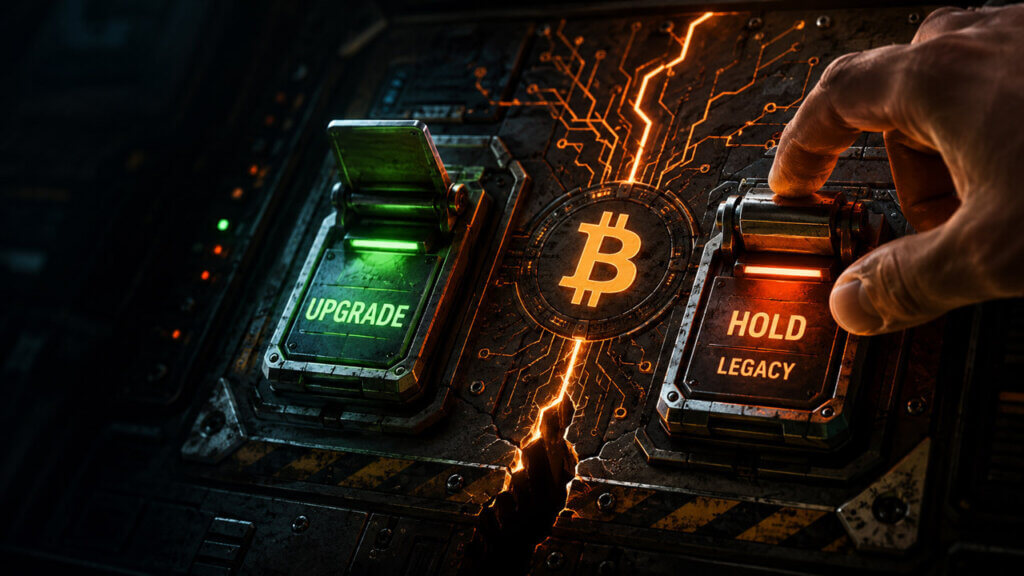
Todd contrasts modest perpetual issuance with a fee-only security budget. The former would push supply beyond 21 million; the latter has no proven example at Bitcoin's scale. No change to Bitcoin's supply rule can advance without a concrete proposal and broad network support.
The post Peter Todd reopens Bitcoin’s 21M cap debate because transaction fees make up just 0.5% of miner revenue appeared first on CryptoSlate.